Friday, July 4, 2008

[CHESS] USCF Leadership Answers to Growth Questions

Last week we brought to you some questions that had been asked (initially posed at the USCF Forums on Tuesday June 24th) of USCF leadership regarding membership growth, promotion of local clubs and other areas of chess interest.
In that membership growth is dependent upon member activity at the grass roots level;
1) What is the USCF doing to promote growth of existing clubs and the creation of new clubs in areas that lack them?

2) What is the USCF doing to promote USCF membership among internet players?

3) What is the USCF doing to promote USCF membership among non OTB groups such as correspondence chess, 960, etc?
I stated that I wished to know the thoughts of several specific individuals in USCF leadership and why thier voices mattered on this issue.
Specifically, I would like to hear from Bill Hall, Bill Goichberg, Randy Bauer, and Susan Polgar about these things, with specifics. Bill Hall is the ED and is involved in the day to day operations, Bill Goichberg is the President and has proposed radical changes to the dues structure and magazine, Randy Bauer has been very outspoken about these proposed changes, and Susan Polgar has been very vocal about alleged incompetence and about rejected promotional offers in addition to opposition to the proposed changes.


On Thursday June 26th USCF President Bill Goichberg responded to the questions and statements in the various posts and emails.

Regarding the opinion held by some members -- including this writer -- that his proposed changes to the dues structure and Chess Life would be the "neutering of Chess Life" Goichberg wrote:
I don't accept that adoption of the new plan would reduce the role of Chess Life, as the online version would also be Chess Life. It's possible that despite bulletin and email reminders to those not receiving the paper magazine, a smaller percentage of our overall membership will read the paper or online Chess Life, but this may be balanced by increased membership (or at least stable membership where there would have otherwise been a decline).
On the three specific questions Goichberg responded:
1) What is the USCF doing to promote growth of existing clubs and the creation of new clubs in areas that lack them?

Clubs have been especially hard hit by the internet, as both appeal to a large extent to players seeking convenient, inexpensive play. The trend for clubs has been down for some time and we would be doing well if we could simply halt this downward slide, but no one has found an effective way to do this. What USCF has done to help clubs in recent years includes:

A) Short TLAs cost less per line than long TLAs, and clubs tend to hold relatively small events with shorter TLAs. Overall, TLAs approximately cover their costs, but the ones submitted by clubs are subsidized somewhat.

B) A free TLA of up to 8 lines, the "Chess Club Special," is offered each month for events playing only on one or more weekday evenings.

C) This year, USCF partnered with R. V. Nuccio to offer USCF affiliates affordable liability and short term event insurance.

D) During the past 4 or 5 years, due to the great work of Mike Nolan, the speed and accuracy of USCF ratings has improved dramatically, helping clubs as well as other affiliates. We have gone from many tournaments taking a month or more to rate, no easy member access to rating reports, and manual corrections often taking over a year, to today's conditions in which events are rated in a few hours, members can view crosstables online with start and finish ratings for events going back to 1991, corrections are automated and quick, and official ratings are updated twice as often. I am aware of no major chess federation in the world that offers rating service as good as USCF.

E) A USCF Forum to discuss Chess Club issues was set up several years ago.

F) Tournament Memberships were reinstated by the EB in 2005 for the first time since about 1990. These reduce the minimum EF+dues cost for new players and are especially of interest to clubs and low fee tournaments, at which the dues would otherwise often cost more than the entry fee.


2) What is the USCF doing to promote USCF membership among internet players?

A) USCF's most effective promotional tool has long been its regular rating system. We need to promote regular rated online play, and the 2008 delegates agenda includes a proposal by the Executive Board to establish safeguards with the idea of promoting regular rated online play.

B) Beginning in 2006, the USCF website dramatically improved its coverage of chess games and news. The site still has some problems that are being worked on, but is much more likely to attract non-member viewers than our old site, which is the first step toward promoting USCF membership among internet players.

C) World Chess Live is providing outstanding sponsorship for our Grand Prix and new Junior Grand Prix, holding quick chess Grand Prix events that require USCF membership, as well as offering a free 6 month membership to USCF members.

D) I know you don't like the proposed $29 adult membership without hard copy Chess Life, but at this price we expect to sign up members who want to read the online Chess Life but would not pay $41. Since 1995, USCF dues have become quite cost sensitive.


3) What is the USCF doing to promote USCF membership among non OTB groups such as correspondence chess, 960, etc?

A) The current EB has agreed with and followed up on suggestions by you and others that USCF should provide international representation for our correspondence players.

B) I would also like to see Alex Dunne's column return to Chess Life, but the board has considered mandating of specific columns to be unwise micromanagement.

C) I doubt that there are a significant number of Chess 960 players in the US. However, we might consider experimenting with tournaments using this variant, which could lead to starting a rating system for it.


Of the things cited by Goichberg, the insurance he noted in 1C is considered most noteworthy. One delegate wrote me, "The insurance is probably the single biggest accomplishment. (...) I know two other organizers who also took advantage of this policy in MA. Personally, I think that USCF should have the email addresses of all affiliates and blast emails to them when something like this becomes available and/or snail mail would even be a nice touch." The delegate added: "Other than that, I find that USCF is as disconnected from its membership and affiliates as is humanly possible. (...) We'll just continue to grow the state affiliate and regional affiliates to take up the slack.

The reality is that the future for USCF is one of two things - either more scholastics members and focus or acknowledgment of a declining adult pool of players. Decreasing dues is just playing with the symptom and ignoring the causes.

Players want an organization which promotes chess. USCF promotes special interests. I don't see anything on the USCF website with a step by step guideline of how to create a chess club, who to contact for assistance, mentors for help, standardized flyers, affiliate web pages, regional events, how to create pools of club leaders to create larger events and jointly publicize clubs. Nothing about arranging club leagues."


After receiving nothing but silence from the other "leaders" named above, I posted the relevant portions of the discussion to Susan Polgar's ChessDiscussion.com forum on Thursday July 3rd. Susan Polgar responded both on that forum and on her US Chess Discussion blog.
The answers for all three questions are either nothing or next to nothing. These are some of the things Paul and I pushed the board to do since last August. These are the areas which we have supported for a long time (via sponsorship, promotion, and publicity). Without chess promotion and drastic improvement in the way how we conduct business, the USCF will continue to struggle very badly to survive year after year. Changing the dues structure will make little if any impact at all. This is also not the priority now. We also outlined the way how it can be done.
First, "nothing or next to nothing" differs quite a bit from Goichberg's fairly detailed answers above, answers Polgar had received via email on June 26th and that had been posted on the USCF Forum on the 28th. With these in hand, why was there no counter points offered if the true answer is "nothing or next to nothing?" Second, the where are the board motions from Polgar and Truong detailing "things Paul and I pushed the board to do since last August?" To have something accomplished it must be submitted for approval and implementation. The way the board works is that those on the board wishing to implement an initiative submit a board motion. I can find no motions in the BINFOs which are the repository of motions and discussion among the board members.

Polgar then lodges complaints about various persons in leadership and contracted staff. This writer finds difficult the task of separating legitimate complaints from politically motivated attacks in much of Polgar's statements since she and Truong took their seats on the board. The assertions comprising this latest statement falls into that category.

The questions were posed to ascertain just what leadership recognized that the USCF is currently doing to promote membership growth among adult chess players in the USA. Bill Goichberg responded with analysis of the USCF's efforts and defended his plan regarding membership growth and financial realities. Susan Polgar answered with very little substance that this writer could find and with what I can only consider a political screed against those she countenances as opponents. No one else in leadership responded at all.

USCF delegates and attendees to the workshops at the US Open in Dallas this year need to keep in mind the above when considering the Goichberg plan and other leadership questions that will arise. While I disagree with the plan as proposed, it must be stated that only Bill Goichberg has addressed the financial crisis and membership questions with a concrete strategy. The only things heard from the rest of leadership are political bluster or silence.

Cross Posted at ChessUSA

Thursday, June 26, 2008

[Chess] USCF: Growing Membership in Local Clubs

In a fit of pique over certain political issues, the latest being the proposed changes to Chess Life distribution and the dues structure, I decided to not renew my USCF membership pending the outcome of the proposals. My wife then over rode that decision by renewing for me...

So, here I am a member of the USCF for at least another year.

I found myself caring, once again, about the direction and continued survival of the Federation. Still being peeved by the proposed neutering of Chess Life, a recent trend that has seen the elimination of Alex Dunne's The Check is in the Mail column last year and the elimination of content pages earlier this year, a question occurred to me: As USCF leadership is reducing the role of one of our few marketing tools, just what plan is in place to promote local clubs which recruit the membership dues that we are so sorely lacking?


So, I asked:
The recent controversy about eliminating Chess Life from some adult memberships to cut costs prompted some questions that I didn't ask as I thought my membership was going to expire.

In that membership growth is dependent upon member activity at the grass roots level;
1) What is the USCF doing to promote growth of existing clubs and the creation of new clubs in areas that lack them?

2) What is the USCF doing to promote USCF membership among internet players?

3) What is the USCF doing to promote USCF membership among non OTB groups such as correspondence chess, 960, etc?


That was on Tuesday. A couple days later... No response.

Perhaps the governance/management types in the USCF did not know to whom I addressed the question, so I clarified it:
[W]e agree about general things the USCF should be doing, but the questions remain about exactly what the USCF is doing. Perhaps the USCF has a detailed strategy. If it does it is unknown to me and others, it seems. It seems that some of us ... believe that the local club culture is essential to a healthy USCF. I really would appreciate an answer from USCF governance/management about the strategy currently in place regarding the questions in this thread's initial post.

If they continue to remain silent then I guess we have our answer.

Specifically, I would like to hear from Bill Hall, Bill Goichberg, Randy Bauer, and Susan Polgar about these things, with specifics. Bill Hall is the ED and is involved in the day to day operations, Bill Goichberg is the President and has proposed radical changes to the dues structure and magazine, Randy Bauer has been very outspoken about these proposed changes, and Susan Polgar has been very vocal about alleged incompetence and about rejected promotional offers in addition to opposition to the proposed changes.


If the above leadership members missed the questions, here they are again:
In that membership growth is dependent upon member activity at the grass roots level;
1) What is the USCF doing to promote growth of existing clubs and the creation of new clubs in areas that lack them?

2) What is the USCF doing to promote USCF membership among internet players?

3) What is the USCF doing to promote USCF membership among non OTB groups such as correspondence chess, 960, etc?


So, how about it USCF leadership? What is the strategy here?

Crossposted at ChessUSA.

Thursday, March 27, 2008

Chess: My Events Update

It has been a while since I updated my correspondence chess events status.
-I may be closing in on my first ICCF event title in four tries.
-I'm currently at the top in what is probably my last ICC correspondence event, but that could change.
-I haven't started another USCF event as certain political events must be resolved within the Federation... Or I'll cease to be a member.
-I've joined the CCLA and CJA.

ICCF

109In the first event I participated in at ICCF, WS/O/109, I long ago finished my games. However, there is still one game going; Deren, Marcin vs. Kýhos, Alois. If Deren wins, he and I are tied with Kýhos for 2nd-4th. If they draw or Kýhos wins, I have a clear 3rd after Pötz and Kýhos. In any case, I can do no worse than 3rd. Pötz is the clear winner after his recent result over Deren. I blogged about several games in this event; Barzaghi - Owens, Owens - Thomas, Kýhos - Owens, and Pötz - Owens. The Pötz loss made me swear off the Kalashnikov, at least for Correspondence play.

120In event WS/O/120, Jan Gantar has won 1st place. I am in a fight for 2nd place with Gerardo Sánchez Carmona. As the chart shows we are tied with four points, he having attained four wins and I having three wins and two draws. Ours is the last game in the event to be resolved and I can only capture 2nd with a win. We are almost sixty moves into a Caro-Kann Gurgenidze in which as Black I am up the Exchange. Sánchez Carmona allowed the exchange for a passed d pawn, but I was able to remove that pawn. We are in the early stages of the end game and I anticipate a full point and 2nd place in this event. I have not yet posted analysis of any of these games.

138In event WS/O/138, I have finished all my games with two wins and four draws. I was disappointed with my performance in this event as in at least three of my draws I had a clear advantage but was unable to press home the win. Once again, I can finish as high as my current 2nd place standing. The first five positions are still to be determined depending on the results of the last two remaining games. I have not yet posted analysis of any of the games in this event. I tried 1...e5 in my game versus Dumitrescu which became a Ruy Lopez Berlin. I entered the end game with a strong advantage but was outplayed in the end game and accepted a draw. Against Sarak I played the Black side of a 1.Nf3 game that turned into an English Symmetrical without g3. I chose a "Dragon" style set up and White responded with the Maroczy Bind. White sacced the Exchange for two connected passed pawns (d and c) that I was later obligated to return the exchange to remove. In the end game, White ended up two pawns, doubled on the g file, and I accepted a draw offer on the 78th move. Against Van henteryck, I played the White side of a Reti English and had a significant initiative late into the game. My pieces were well placed and had scope, but Black was well positioned for defense and had a passed c pawn. This game was tortuously drawn out with Black often moving only once every three or four weeks and several times coming within hours of a time forfeit. I couldn't see a definitive win and accepted a draw on the 35th move. Against Pareschi I played the Black side if an uninspired closed Sicilian (3.Bc4) that ended in a 40 move draw.

172In event WS/O/172, I am cautiously optimistic about my chances. I am currently in the lead with 3.5 points (three wins and a draw). In the one draw (Owens - Lehnen) I played a Reti English as White and allowed the game to get drawish much too quickly. Richardson - Owens saw White sac a piece for three pawns early in the middle game. I sacced the Exchange to double his f pawn and open up his King side around move 25. The Black Queen and Knight moved quickly on the weakened King side and White resigned after move 31. In Laine - Owens I returned to my favorite Caro-Kann. Bucking the trend, Laine chose the Classical variation. After White castled long, Black found a very strong attack on the c file and White resigned after move 26. Owens - Pooley is still on going in a Caro Kann Advance variation that is in the middle game. I think I have a strong advantage in this one. Owens - White is in the end game of a Reti English where I am up three clear pawns, two being connected passed pawns. The Queens are still on the board so the outcome is in doubt, but I retain a very strong advantage.

ICC

I have one game in one event still going at ICC. I think this will be the last ICC correspondence event for me. Twice my opponent has over stepped the time limits and has been allowed to continue. One game, as White in the London System, where I had to fight back from a tactical blunder very early ended in a draw. The other, where I am Black in a Reti English that transposed to a conventional KID, is on going. We're just entering the end game and I think I have a decent initiative. In the event, I have scored four out of five points with one point to be determined. As the event page has not been updated I'm not sure where I stand; win, place, show, or last. Blogged games from my last two ICC correspondence events are here, here, here, here, and here.

USCF

Both of the events (USCF/WS/07WM27 and USCF/WS/07WM41) I participated in at USCF Correspondence have finished. The only game I blogged is here.

ORGANIZATIONS

I've joined both the Correspondence Chess League of America and Chess Journalists of America. I joined CCLA as one must be a member of USCF or CCLA to play in ICCF events. There are certain circumstances that may prompt me to leave the USCF when my annual membership is due this summer. CCLA is also inexpensive. I joined CJA since this and ChessUSA place me in a "journalist" type capacity. I encourage ALL bloggers to join CJA. The fee is insignificant ($10 per year) and if a sizable contingent of bloggers join and agree to abide by the CJA code of ethics I believe bloggers will gain better acceptance both from the size of the affiliated blogging community and the ethical quality of the resulting blogs that adhere to the code.

Thursday, March 20, 2008

Chess: My First ICCF Rating

Based on my first 16 games I have my first published ICCF rating (1941) on the 2008/1 list:


This is very in line with my ICC rating which is at 1996.


At USCF I am at 1776 after six games and CCLA used my USCF rating of 1776 as a starting point. So, I'm at Class A at ICCF and ICC while my USCF rating has me in Class B. Trouble spots I have noticed are end games (I can think of at least one "won" game I blew with a poorly played end game) and my White repertoire. I do well when playing the Catalan as white, but not so well with the Reti and the London System or even the QG. The one rock solid part of my game is my Black repertoire versus 1.e4. I LOVE the Caro Kann!

Thursday, February 28, 2008

Chess: A Caro Kann Win (Exchange - Gurgenidze Variation)

This is one of the better games I played in the recently concluded USCF Walter E. Muir 07WM41. I absolutely LOVE the Caro Kann! My opponent used the Exchange variation and I responded with a Gurgenidze (fianchettoed King Bishop) setup.

[Event "USCF/WS/07WM41"]
[Site "ICCF"]
[Date "2007.10.6"]
[Round "-"]
[White "Hoffmann, Joe"]
[Black "Owens, Steve"]
[Result "0-1"]
[WhiteElo "1643"]
[BlackElo "1575"]

1. e4 c6 2. d4 d5 3. exd5

chess

Oh, Goody! The Exchange Variation. White players of 1.e4 will often choose the Exchange as it appears to be easier to assimilate than the Panov, Classical, or Advance variations.

To a CK player like me, the Exchange is candy that achieves our goals of attaining equality with an equal share of the center.

3... cxd5 4. Bd3 Nc6 5. c3 g6 6. Nf3 Bg7 7. O-O Nf6 8. Re1 O-O

chess

Let's look at the position:
Black's pieces are very actively placed. Black has an equal share of the center. The Black King is safely ensconced behind a fianchettoed Bishop and the best defender of any King's Position, the Knight on KB3 (f6). White is castled and his rook developed to e1. He also has a Knight on KB3 (f3). His King Bishop is nicely placed at d3.

Looking deeper, this position plays like a Queen Pawn opening. In such openings, the advance/exchange of the c pawns often determine the outcome of the game. Black has traded his for the White e pawn and has the complete use of the c file. The White c pawn, however, is retarded and may not advance without weakening White's position. In this variation, White has transposed to a QP opening and has solved Black's largest dilemma, that is, how and when to get in P-QB4 (c5).

9. h3 Qc7 10. Bg5 Re8 11. Nbd2

Na3 is an alternate. Bobotsov - Arlamowski (Miedzyzdroje - 1952) continued 11.Na3 a6 12.Qd2 Bd7 13.Re2 Rad8 14.Rae1 Qc8 15.Nc2 b5 16.Ne5 Nxe5 17.dxe5 Ne4 18.Bxe4 dxe4 19.Rxe4 Bxh3 20.Nd4 Be6 21.a3 Qb8 22.Qe2 Bd5 23.Re3 Bc4 24.Qg4 Qc8 25.Qh4 Qc7 26.g4 Rd5 27.f4 Rxd4 28.cxd4 Qd7 29.d5 Bxd5 30.Rh3 h6 31.Bxh6 Bxh6 32.Qxh6 Qxg4+ 33.Kf2 Qg2+ 34.Ke3 Qe4+ 35.Kd2 Qd4+ 36.Kc1 Qc4+ 37.Rc3 Qa2 38.Qh4 a5 39.f5 b4 40.fxg6 fxg6 41.axb4 Qa1+ 42.Kc2 Qa4+ 43.Kd2 Qxb4 44.Qxb4 axb4 45.Rc5 Rd8 46.Ke3 Kf7 47.Rb5 b3 48.Rd1 Ke6 49.Rxb3 Kxe5 50.Rb6 Rg8 51.b4 e6 52.b5 g5 53.Kf2 Rc8 54.Rb1 Rc2+ 55.Ke3 g4 56.Rb8 Rc4 57.b6 g3 58.Rg8 Re4+ 59.Kd2 Rd4+ 60.Ke1 Re4+ 61.Kf1 Rf4+ 62.Kg1 g2 63.Rh8 Rf7 64.Rh5+ Kd6 65.Rh8 Rb7 66.Rd8+ Kc6 67.Rc8+ Kd6 68.Rcc1 Rf7 1/2-1/2
http://www.chessgames.com/perl/nph-chesspgn?text=1&gid=1310314

11... a6 12. a4 Nh5

This little dance by the Knight is in response to the vulnerability on e8 and a small threat to take f4 as an outpost with the attendant pressure on the White squares and Queen Bishop.

chess

13. Be2 Nf6

I thought hard about 13...Nf4 but decided I was not ready to attack at that moment.

14. Bd3 Nh5

Ok! I don't think he had a definitive plan with Be2.

15. Bh4 Bd7 16. Nf1 e5

chess

It was now or never for an e5 break.

17. dxe5 Nxe5 18. Nxe5

18.Ne3 Nf4 might have been an alternate continuation.

18... Rxe5

Taking with the Queen is more flexible.

19. Rxe5 Qxe5 20. Bg3 Nxg3

chess

This is the result of leaving the Bishop on g5-h4 instead of retreating to e3 around move 13 or 14. Black now has the two bishops and plenty of diagonals to open and exploit.

21. Nxg3

Another look at the position:
Black's pieces are very well placed and active. The Queen is centered and dominates the board. The Isolated Queen Pawn is not a liability and can advance readily. White's Rook needs to get to the e or d file but the Queen blocks him. White should remedy that now, but instead...

21... Bc6 22. Rc1? d4!

This helps further Black's pursuit of taking the center of the board. With White's Knight removed toward the rim as a result of the exchange on g3 and Black's possession of the two bishops, Black's Queen has an almost unbreakable hold on the central position. The Black Rook is poised to add his weight to that hold.

23. cxd4 Qxd4 24. b3 Rd8 25. Be2 Qh4

chess

Why exchange Queens when an attack on the King can be glimpsed, the Rook can take control of the d file, and the King Bishop can seize d4 and put more pressure on f2?

26. Qf1 Bd4 27. Rd1 Rd6

f6 is the Rook's destination.

28. Rd3 Rf6 29. Nh1

chess

Once again taking stock of the position. White does have his Rook on a central file, but it is totally defensive. His Queen and Knight have retreated all the way back to defend f2. His Bishop can only look on while the action is on the opposite color.

29... h5

To remove the Bishop's one useful outpost to combine with Bb6.

30. Bg4 Bb6

The Bishop must vacate immediately.

31. Bd7 Be4

No Trades.

32. Rd2 Qf4 33. Re2 Rd6 34. Qe1

Perhaps 34.a5 could have been tried to disrupt the b6 Bishop.

34... f5 35. Be8 Bd4 36. a5 h4
0-1


chess

White Resigns. The Black pieces have complete control of the board. Of the four center squares, Black pieces sit on two and the other two pieces control and influence all four. White's pieces are relegated to the board rims, with only White's Rook off of the edge, and only by one file. The Knight is banished to the corner on h1.

The two bishops, pinning pawns and pieces around the King, have visions of mating nets swimming in Black's dreams while causing horrific nightmares for White's King.

The continuation will be 37.Ba4 Be5 38.g3 Qf3 39.Rxe4 fxe4.

Sunday, January 13, 2008

Chess: Luck of the Irish

Friend of the blog Anthony Ragan is in this month's The Check is in the Mail with a Walter E. Muir correspondence chess event win. Anthony finished 4.5-1.5 to win Muir 07W35.

Congratulations!

Tuesday, January 8, 2008

Chess: Another Muir Win


YaHoo!

I'll post the games as soon as I have had a chance to go back through them. My opponents in this event were accomplished and tough. All had multiple Muir and other USCF event titles. Of the correspondence events I have taken part in over the past year (I started back last January) the Muir events have been the most enjoyable.

Wednesday, December 19, 2007

Bog Addiction

Polly and DG did it, so I figured I'd give it a shot...

52%How Addicted to Blogging Are You?

Find Sonography schools near you


I think my score is bumped up because I READ a lot of blogs... And because I technically have two blogs. I'm trying to get ChessUSA transitioned into a community type blog format and will eventually let it go to others to control.

By the way, if you blog about chess in the USA and want to contribute to ChessUSA, shoot me an email!

Friday, December 14, 2007

Chess: TakChess' Book Club


(Hat tip to DG at Boylston Chess Club Weblog)

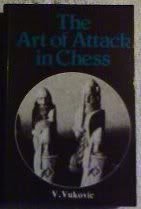
TakChess is trying a novel approach to studying Vokovic's classic The Art of Attack in Chess.

"I recently read SamuraiPawn's blog and about his fascination with the Art of Attack in Chess by Vladmir Vukovic . He convinced me to spend some time on it. I am have sampled it various times during the past year but have not read it with any consistency. I now intend to read it straight through, take notes on this blog and slowly study the games. I invite anyone who wants to join me to follow along and add any notes you care to in the Comment Section. (feel free to do this even if it is weeks, months or years after this initial blog was posted)"


I'll be following along with my copy, an ancient edition with Descriptive notation from Pergamon. TakChess is using a newer edition from Everyman that, "translated the games to Algebraic Notation, added more diagrams, checked the analysis, added footnotes and polished the language." TakChess' copy has a publication date of 1998, mine is a reprint from 1988. My even older edition from, as I recall, sometime in the 70's fell apart long ago and has been lost.

December Chess Carnival (Edition IV) at ChessUSA


The December Chess Blog Carnival and Reaction to the Carnival are online at ChessUSA.

Monday, December 3, 2007

Chess: Breaking 2000, Another London System Win

ratingI've broken the "2000 barrier" at ICC correspondence. WooHoo!

Earlier, I stated that I had tried the London System and had found it wanting for correspondence chess. Despite that, it seems that I am getting the better position in some games using the London. In others the opponent is simply misplaying the position. Regardless of the success I've had with the London, I still think I will not use it in correspondence from here out. It seems to me that I have had to grind out each game in this system and it hasn't been fun. Enjoyment is in itself perhaps the best factor in choosing an opening system.

[Event "ICC correspondence 2007Seven.02.05"]
[Site "Internet Chess Club"]
[Date "2007.08.25"]
[Round "-"]
[White "sdo1"]
[Black "az2112"]
[Result "1-0"]
[ECO "D02"]
[WhiteElo "1956"]
[BlackElo "1592"]
[Opening "Queen's pawn game: London System"]
[NIC "QP.08"]

1. d4 d5 2. Nf3 Nf6 3. Bf4 e6 4. e3 c5 5. c3 Nc6 6. Nbd2 Bd6 7. Bg3 O-O 8. Bd3 Qe7 9. Ne5 Nd7 10. f4 f6 11. Nxd7 Bxd7 12. O-O Rac8 13. Qe2

chessThis is another good London System setup. Black, when playing against the London, must always be on guard for tactics against his King side pawns, particularly the h7 pawn. Here, the protective g6 Knight is gone and the light Bishop has sighted in on h7. The Queen has free access to the light King side squares and can easily join an attack on h7 if Black ignores the weakness. Otherwise, Black has a good position and can defend, as long as he defends accurately. Black is well on his way to equalization and has possibilities of an attack after his King is secured. Some would say that Black even stands a bit better in this position. Black's pawns have more flexibility, his pieces are more central, and he has the promise of a center break at his time of choosing. Unfortunately, for Black, he chooses to try the break too soon.

13. ...e5? 14. fxe5 fxe5 15. Qh5

chessThis is the result of the early ...e5. The Queen invades and there is no good way to prevent the Bishop's attack resulting in either a won pawn with a fractured King side, or a Bishop sac for a complete removal of the two protective King pawns.
15. ...g6 16. Bxg6 hxg6

Other tries were ...Bb8 and ...Qg7.

17. Qxg6+ Kh8 18. Qh6+ Kg8 19. Bh4 Qe6

This was simply a flier for Black. He will certainly lose material anyway, this desperado was worth trying.

20. Bf6 Kf7? 21. Qh5+ Kg8 22. Qg6#

20...Kf7 leads directly to mate.

The lesson in this game is glaring, Black must always guard against an attack on his h7 when White exchanges off the g6 Knight in the London. Against this system, it is probably best not to post the Queen Knight aggressively to c6, but instead to d7 where it supports the defense of the King side and a c5 push. The London player, much like the Colle player, is looking to attack the g and h pawns in front of the King. The light Bishop, while having as his first duty the support of the e4 push, is optimally poised to take advantage of the absence of a g6 Knight, and with the Queen makes a happy battery to hammer at h7.

Friday, November 30, 2007

Chess: December Chess Carnival - Send Entries Now!


My name is Steve Owens and my blog is at sdo1.blogspot.com. Jack and I also blog at chessusa.blogspot.com where I have volunteered to host December's Chess Carnival. I would be honored if the chess blogosphere would accept this invitation to submit blog articles for inclusion in this version of the Chess Carnival.

Please follow this link to submit an item from your blog http://blogcarnival.com/bc/submit_2250.html or send me an email at p944dc@gmail.com with the following information:

Permalink URL
Title
Article Blog
Blog URL
Blog Name

Submitter name
Submitter e-mail
Category
Remarks

As an example I have cut and pasted Mark Week's submission below (Thanks Mark)

Permalink URL ¤
http://chessforallages.blogspot.com/2007/10/mongols-russia-and-strobeck.html
Title ¤ Mongols, Russia, and Strobeck

Blog URL ¤ http://chessforallages.blogspot.com/
Name ¤ Chess for All Ages
Additional information
Submitter name ¤ Mark Weeks
Submitter e-mail ¤ carnival@mark-weeks.com
Category ¤ Chess Events
Remarks ¤ Hi Jack - Please feel free to contact me if you ever
become desperate for a carnival host. - Mark

Wednesday, November 21, 2007

Chess: My Events Update

My last events update was in September...

Starting with ICC. Both of the events I am in there are drawing to a close.

In 2007Seven.02 I have four wins (as White against John3v16 and AntonioMendonca and as Black against jonesey and OnGoldenPawn) with no draws or losses. Two games are yet to be decided. As Black against Stahlberg I am a Bishop to the better and have a King side attack brewing in the middle game of a Caro-Kann: Panov-Botvinnik attack. As White versus az2112 I played the London and we are just entering the middle game. Again, I have a strong King side attack brewing and am a pawn to the better. I came into the event as the highest rated player but I have had to fight for each point.

In 2007Quad.08 I have two wins, two draws, and no losses (yet). I have finished my games with The7thGuest and Molton having won once and drawn once with each. Both games versus my last opponent (Boromir) are ongoing. As White, I played a suspect line in the London System but I think I have equalized out of a bad spot. I grabbed a pawn in the opening and have been paying for it... Grabbing pawns in correspondence chess when there are other things to be done is a no-no! In my game with Black we have entered the middle game of a Reti/KID and I think I have at least equalized and may have a small plus.

az2112 and Boromir have both over stepped the time limits and have been warned by the TD. Hopefully we can get those games going in good fashion again.

I would post cross tables but it seems they have not been updated since the events began. With my latest result (the win over Molton), I have achieved my highest ICC Correspondence rating so far (1999).

Chess

Woah... Maybe I should play 3's and 9's on the lottery. I have a 1999 rating as of 19 November with 33 wins, 3 losses, and 3 draws for a total of 39 games. Cue the spooky music!


Over at ICCF I have finished all my games in WS/O/109. Several of the leaders have yet to finish games. Right now I am in Third, but I anticipate no better than a Fourth place finish. As I wrote in September, for my first ICCF event I think I had satisfactory results. My loss to Pötz hampered my goal to finish near the top.


WS/O/109TD Millstone, Michael
Rated1234567ScoreSBRPlace
1AUT10588 Pötz, Florian1800P½1.111

4.5

9.5

1

1

2CZE130711 Kýhos, Alois1701½½.111D

4

7.75

1

2

3USA514360 Owens, Steve1800P0½½111D

4

7

0

3

4POL421419 Deren, Marcin2019F..½½11D

3

4.25

2

4

5USA514348 Thomas, Gerald K1800P000½11

2.5

2.5

0

5

6GER85582 Kaspschak, Mrs. Karola1800P000001D

1

0

0

6

7ITA241236 Barzaghi, Andy1800P00D0D0D00D

0

0

0

7

XD = result by default
XF = FIDE Elo
XP = provisional
Sorted by place. Click to sort by start list order.


In event WS/O/120 I am in clear second with one game to go. The three of us at top each have only to finish our games with Sanchez Carmona. Of course, I don't know how the other games are going, but in my game with Sanchez Carmona I am the Exchange up as Black in a Caro-Kann: Gurgenidze System. We are entering the end game (R,B,B vs. R,R,B and four pawns each) and I just need to put this puppy away. I could finish anywhere from first to third. I think second is most likely. I had too many draws in this event. Jan Gantar has four wins already to my three.


WS/O/120TD Marconi, Ralph P.
Rated1234567ScoreSBRPlace
1SLO480238 Gantar, Jan1800P½1.111

4.5

7.5

1

1

2USA514360 Owens, Steve1800P½½.111

4

6

1

2

3AUS30119 Ramsden, Jim E.18520½.111

3.5

4

1

3

4ESP160980 Sánchez Carmona, Gerardo1800P...111

3

2

3

4

5USA514396 Lynn, Bret1800P0000.1

1

0

1

5

6TUR490209 Ciklabakkal, Metin1800P0000.1

1

0

1

5

7NOR360548 Stenseth, Bjørn Gunnar1800P000000

0

0

0

7

XP = provisional
Sorted by place. Click to sort by start list order.


In my latest ICCF event, WS/O/138, again I have too many draws to be a favorite, but I'll finish near the top. I missed my chance to stand out from the pack with Black against Dumitrescu in a Spanish Berlin game. I had a clear advantage but missed the win in the end game with two passed pawns. Pareschi and Sarak are still playing thier game and so have a chance to pass Dumitrescu and me in the standings. I'll at least finish second or third assuming I can take care of my last game with Van hentenryck.


WS/O/138TD Millstone, Michael
Rated1234567ScoreSBRPlace
1ROM440627 Dumitrescu, Florian1800P½½½.11

3.5

5.75

1

1

2USA514360 Owens, Steve1800P½½½.11

3.5

5.75

1

1

3ITA241242 Pareschi, Remo1800P½½..11

3

4.5

2

3

4GER84051 Sarak, Michael1800P½½..11

3

4.5

2

3

5BEL40214 Van hentenryck, Alain1689.....1

1

0

5

5

6USA511398 Peterson, Miss Janet16760000.1

1

0

1

6

7SUI100390 Galanti, Sergio1628000000

0

0

0

7

XP = provisional
Sorted by place. Click to sort by start list order.


I am in the midst of my second USCF Walter E. Muir event (USCF/WS/07WM41). Back in August I finished first in USCF/WS/07WM27. This one is going to be much, much tougher. I have wins in both games against Bill Evans again. No knock on Bill, sometimes another person just seems to have your number. My opening repertoire seems to be set up perfectly for his. The other players in this event all have multiple first place Muir finishes.

As an example of how tough this event is, here are the tournaments won by participants in the last several months:

OCTOBER WINNERS
Walter Muir Webserver
William Evans 07W28 5-1
William Evans 06W22 3 ½-2 ½
Thomas Haggard 06W22 3 ½-2 ½
William Evans 07W08 5-1
Joe Hoffmann 07W25 6-0

SEPTEMBER TOURNAMENT WINNERS
John Collins
Thomas Haggard 05C39 4-2

Walter Muir
Joe Hoffmann 07W16 4 ½-1 ½
William Evans 07W01 6-0
William Evans 07W21 6-0

Yikes!

Also of note: friend of the blog Anthony Ragan has a Muir win, too!

SEPTEMBER TOURNAMENT
WINNERS
Walter Muir
Anthony Ragan 07W16 4 ½-1 ½

In my games with Bill Evans, as Black we played a Semi-Slav: Meran. In the early middle game I was able to disturb his King side pawns with an exchange of his f3 Knight for my light Bishop. The open g file left by the recapture of the light Bishop was immediately exploitable by my Queen and King side Rook. In the other game Evans responded to 1.d4 with a Dutch Defense. I used a Catalan/Reti style setup with which I was familiar, and advanced my Queen side pawns aggressively. At about move 16 Bill dropped the f pawn in an exchange of Knights. A few moves later I was able to win the Exchange and then invade the seventh and eighth ranks with my rooks.

The other games are ongoing.

Against Thomas Haggard, in my game with Black Tom opened with what he called the "Haggard Gambit" in the Caro Kann Exchange. I'm not sure he has received compensation, but play continues... In my game as White, we are in a Bogo-Indian and things are very much in flux. Both games are in the opening stages.

Against Joe Hoffman, as Black I have the Bishop pair in the late middle game of a Caro Kann Exchange game. What is it with all these Exchange and Panov games? Has everyone abandoned the Advance against the CK? In our game that I have White, we are in the late middle game stages of another Bogo-Indian. It has been very tight but I am a pawn up. As compensation Black has a protected passed central pawn while my passed pawn is outside and isolated.


USCF/WS/07WM41TD Dunne, Alex
Unrated11223344ScoreSBRPlace
1USA514322 Hoffmann, Joe ..11..

2

2

4

1

2USA514360 Owens, Steve ..11..

2

2

4

1

3USA514306 Evans, William162000001.

1

0

1

3

4USA514316 Haggard, Thomas .....0

0

0

5

4

Sorted by place. Click to sort by start list order.


My USCF rating is up to 1621 as of yesterday. If my current games are any indication I may be leveling off at between 1600 and 1700 for USCF Correspondence.

Friday, November 16, 2007

Chess: Another London Win, a Caro Kann Draw

[Event "ICC correspondence 2007Quad.08.02"]
[Site "Internet Chess Club"]
[Date "2007.08.18"]
[White "sdo1"]
[Black "The7thGuest"]
[Result "1-0"]
[WhiteElo "1971"]
[BlackElo "2035"]
[ICCResult "Black resigns"]
[Opening "King's Indian: London system"]
[ECO "A48"]
[NIC "QP.03"]

1. d4 Nf6 2. Nf3 g6 3. Bf4 Bg7 4. e3 O-O 5. Nc3

chess

This is a thematic and positional mistake. White should play the Knight to d2 instead of c3 if developing before moving the c pawn in any case, and especially in the London where c3 is a support for d4 and the Knight at d2 helps support the thematic e4 push coming later.

5. ...d6 6. h3 Nbd7 7. Bd3 c5 8. O-O a6 9. a4 b6

chess

I was not happy with my position. The fifth move still irked me. In OTB play that would probably have been enough to lose the game for me, and as improving real time play is a reason I play correspondence, perhaps I can translate the experience into a beneficial mindset OTB. The position, while not what I wanted, is still a good one and 9. a4 took steam out of any expansion Black had wanted Queen side.

10. d5 h6 11. e4 g5 12. Bh2 g4 13. hxg4 Nxg4 14. Bg3 Nde5 15. Nxe5 Nxe5 16. Re1

chess

Black lashed out with his King side pawns and his Knights, but I think he only damaged his position. The dark Bishop is still a nuisance to him, his Knight's post is temporary, and his King has a lot of open attacking ground to the front. My goal from here was to exchange off his King side pieces while getting my pieces to the King side. If he didn't exchange off his Knight for the light Bishop, I had several candidate plans with the f and e pawns and the e file to get my pieces into the action. One enticing target is the isolated h pawn.

16. ...Bd7 17. Qh5 Bg4 18. Qh2 Nxd3 19. cxd3 Ra7 20. Re3 Kh7 21. Bf4 Rh8 22. Rg3 Bd7 23. Re1 b5

chess

I thought 23...b5 was a mistake. I was expecting something to get the Queen involved in the center or King side defense. Perhaps Qf8, e5, or f6 were better defensive tries.


24. Qh5 Qf8 25. e5 dxe5 26. Bxe5 Rg8 27. Ne4

chess

Now my pieces are all on the King side and in great attacking position. Black doesn't have time to do anything on the Queen side with his pawns and Rook and still defend the King.

27. ...Bxe5 28. Qxe5 Rxg3 29. Nxg3 Bc8

chess

After the exchanges and the retreat of the Bishop, White's pieces are still in attacking position, the Black King is still exposed to those pieces, the Black Queen is the only Black piece directly defending the King but is very over worked. The ISO doubled d pawns can't be exploited and the d5 pawn will soon advance into the Black position. The Black Queen side is ready to give up material.

The White Queen rules all, attacking in every direction and in command of the board.

30. axb5 axb5 31. Rc1 Bd7 32. Rxc5 f6 33. Qe3 Ra2 34. Rc7 {Black resigns} 1-0

chess

33...Qf7 or Qe8 probably gave the most resistance. Ra2 loses material very quickly. After 34...Qd8 35. d6 the e pawn will fall and Black will be compelled to lose more material.

In the other game of our match (2007Quad.08.01) I relied on my trusted Caro Kann against the higher rated player. The Caro Kann player must not fear the exchange of his light Bishop, and in fact he must be able to embrace it in several lines of the Classical variation. The tempi invested by White in the exchange should allow Black more than enough compensation.

In this game the CK lives up to its dull reputation as both players could find no chinks in the opposition's defense.

[Event "ICC correspondence 2007Quad.08.01"]
[Site "Internet Chess Club"]
[Date "2007.08.18"]
[Round "-"]
[White "The7thGuest"]
[Black "sdo1"]
[Result "1/2-1/2"]
[WhiteElo "2055"]
[BlackElo "1969"]
[ICCResult "Game drawn by mutual agreement"]
[Opening "Caro-Kann: classical variation"]
[ECO "B18"]
[NIC "CK.10"]

1. e4 c6 2. d4 d5 3. Nc3 dxe4 4. Nxe4 Bf5 5. Ng3 Bg6 6. Nf3 Nf6 7. Nh4 e6 8. Nxg6 hxg6 9. c3 Nbd7 10. Bd3 Bd6 11. Qf3 e5 12. Be3 exd4 13. Bxd4 Qe7+ 14. Qe2 Be5 15. Bxe5 Nxe5 16. O-O-O O-O-O 17. Bc2 Qc7 18. Rxd8+ Rxd8 19. h3 Re8 20. Rd1 Ned7 21. Qd2 Nb6 22. Kb1 Kb8 23. Qg5 a6 24. Bb3 Nbd5 25. Qh4 Qe5 26. Qc4 Qc7 {Draw (Black Offered)} 1/2-1/2

chess

Sunday, October 28, 2007

Chess: The Caro Kann as a Weapon

My opponent in this game writes:

Here is another one of my correspondence chess games played at ICC. I just resigned today because the only way to avoid checkmate was to sacrifice my Queen for a Rook. I am now 0-2 in this section. My new correspondence chess rating is 1551 and my opponent's is 1959. I ended up in an opening that I don't know against a much higher rated player. I used MCO 14 as my guide to the opening but my opponent got me out of book early when he prevented my Knight from going to b5. My opponent's first name is Steve. I don't know his last name. He lives in TN. I am not posting this game to my chess site because I don't normally play either side of the Caro-Kann.


Mike's comments are illuminating on several fronts.

First, the viability of the Caro Kann is enhanced by the fact that club level players (and that is most of us) don't see it very often. King pawn players typically concentrate on their e4 opening of choice and the variations of 1...c5 and 1...e6 they are sure to see. 1...c6 is usually an afterthought in their opening repertoire. In OTB play this will lead to uncertain play from many White opponents and in correspondence play the undeserved reputation of the Caro Kann will lead to a bit of carelessness from players less than Class A.

Second, when White uses a lesser known variation (in this case 2.c4) they are often at a loss as to the subtleties of the opening while the Black player is completely at ease with his position, having seen, studied, and played it before. Mike states that he was out of book (using MCO-14) early on. When, as White, your opponent plays a lesser used opening, you may be certain that he has various sources to choose from for opening theory. We are in the computer age and players should avail themselves of the databases that are on the net, at the very least. Chessgames.com and Chesslab are excellent sources for quick access to master level games on almost every opening.

In our game, I have to wonder if Mike knew that this variation involved having an Isolated Queen Pawn.

The Caro Kann has a reputation of being a dull, uninspired opening. It is not. It is a tough defense that turns into a dangerous attacking weapon if White plays carelessly at any point. It attracts players that have based their play in sound positional theory and that are willing to be patient and accumulate advantages as they come along.

[Event "ICC correspondence 2007Seven.02.06"]
[Site "Internet Chess Club"]
[Date "2007.08.25"]
[Round "-"]
[White "OnGoldenPawn"]
[Black "sdo1"]
[Result "0-1"]
[ECO "B10"]
[WhiteElo "1549"]
[BlackElo "1969"]
[Opening "Caro-Kann: anti-anti-Caro-Kann defense"]
[NIC "CK.01"]

1. e4 c6 2. c4 d5 3. exd5 cxd5 4. cxd5 Qxd5 5. Nc3 Qd6 6. d4 Nf6 7. Bc4 e6 8. Nf3 a6

chess

I have no intention of allowing White to get at b5 and c7.

9. O-O Be7 10. d5

chess

White here wishes to sac his ISO to open lines for his better developed forces. My conclusion is that this forcing is too early, he isn't that better situated despite being castled. 10...b5 allows me to disrupt the pieces he has developed. 12. dxe6 was a better try than retreating the Knight and at that point we are completely out of theory.

10. ...b5 11. Bb3 b4 12. Ne2 Nxd5 13. Bg5 Bb7 14. Bxe7 Qxe7 15. Ned4 O-O 16. Re1 Rd8 17. Qc1 Nd7 18. Qd2 Rac8 19. Nxe6 fxe6 20. Bxd5 Nc5 21. Bxe6+ Nxe6?

chess

I understand why saccing a piece here is attractive, and it might work in blitz play. However, in correspondence is simply loses a piece for a pawn. From here out it is simply a matter of translating the material advantage to a win. This was aided by White falling for the trap of 25. Qxa6.

22. Qe3 Bxf3 23. Qxf3 Qf7 24. Qe2 Nf4 25. Qxa6 Nxg2 26. Kxg2 Qd5+ 27.
Kg1 Rc6 {White Resigns} 0-1

Chess: London System vs. the KID

[Event "ICC correspondence 2007Seven.02.03"]
[Site "Internet Chess Club"]
[Date "2007.08.25"]
[Round "-"]
[White "sdo1"]
[Black "AntonioMendonca"]
[Result "1-0"]
[ECO "A48"]
[WhiteElo "1959"]
[BlackElo "1656"]
[Opening "King's Indian: London system"]
[NIC "QP.03"]

1. d4 Nf6 2. Nf3 g6 3. Bf4 Bg7 4. e3 O-O 5. Nbd2 d6 6. Be2 Nbd7 7. h3 Re8 8. c3 e5 9. Bg3 Nh5 10. Bh4 Nhf6 11. dxe5 Nxe5 12. O-O

chess

Again, a classic position for the London player.

12. ...Bd7 13. Nxe5 Rxe5 14. Bf3 Rb8 15. Ne4 h6 16. Qd4 b6 17. Rfd1 g5 18. Bg3 Re6 19. Nxf6+ Bxf6 20. Qd3 Qe8 21. Qc4 c5?

chess

21...c5 ruins Black's game. White had sallied 21. Qc4 to see if the light squares could be exploited. 21...Qc8 gives Black plenty of recourse and the game is about even. With 21...c5, Black has left the d6 pawn en prise, permanently weakens light squares across the board (exacerbated by 17...g5), and leaves f7 and g8 open to pressure from a Queen-Bishop battery via a pin on the Rook. Instead of grabbing the pawn, I decided to take the exchange on the e Rook. Even without the support of the light Bishop, the Queen will invade the Queen side via the light squares and force Black to give up material after attrition of forces.

22. Bd5 Rd8 23. Bxe6 Bxe6 24. Qe2 d5 25. a4 Bg7 26. Qa6 Qe7 27. a5 Bc8 28. Qb5 Bd7 29. Qe2 Bc6 30. axb6 axb6 31. Qa6 Qb7 32. Qxb7 Bxb7 33. Bc7
{Black Resigns} 1-0

With no possibility of preventing White from accumulating further material, Black resigned.


Saturday, October 27, 2007

Chess: My First Result Using the London System

[Event "ICC correspondence 2007Seven.02.01"]
[Site "Internet Chess Club"]
[Date "2007.08.25"]
[Round "-"]
[White "sdo1"]
[Black "John3v16"]
[Result "1-0"]
[ECO "A40"]
[WhiteElo "1969"]
[BlackElo "1807"]
[Opening "Queen's pawn"]
[NIC "QO.17"]

1. d4 Nf6 2. Nf3 e6 3. Bf4 c5 4. e3 Be7 5. c3 b6 6. h3 Bb7 7. Nbd2 O-O 8. Bd3 d6 9. O-O Nbd7 10. Re1

chess

This is the setup the London player wants as White against almost any defense.


10 ...h6 11. e4 cxd4 12. cxd4 a6 13. Qe2 b5 14. a4 b4 15. Rac1 Nb6
16. a5 Na4

chess

I thought Black's 16th was a positional mistake. I would have favored Nbd7 instead. His Knight is on the rim away from the action and will not be able to escape to re-enter the game. The attacks on the Knight will draw Black's pieces away from the action, and I don't see how Black could avoid losing material in the Knight's defense, anyway.

17. Bc2 Bc6 18. Qc4 Qd7 19. Qb3 g5 20. Bxd6

chess

Black's 19 ...g5 allows White to win the d pawn and possibly remove a defender (Bishop) of b4. Black's choice to keep the Knight instead of the Bishop (on 21. e5 Nd5) is also a poorer choice. The Bishop had more range and is needed in defense more than the Knight.

20 ...Bxd6 21. e5 Nd5 22. exd6 Qxd6 23. Ra1 Nf6 24. Ne5

chess

The Knight at a4 is en prise. Ne5 attacks the defenders, but more importantly, clears the way for the Queen to enter the King side to attack the King's open position and unsecured f6-Knight.

24 ...Bb5 25. Qf3 Qxd4 26. Qxf6 1-0

chess

Black falls for the trap with 25 ...Qxd4. After 26. Qxf6 Black resigned, as he pointed out 26 ...Qxd2 27. Ng6! wins for White. Black must either sacrifice his Queen at f2, or be mated.


Thursday, September 27, 2007

Chess: The Caro Kann Lives

The ICCF WS/O/120 correspondence event is entering the final stages. Currently I stand at three wins, two draws, and no losses in the event. One of my first games finished was as Black against Metin Ciklabakkal.

[Event "WS/O/120"]
[Site "ICCF"]
[Date "2007.4.21"]
[White "Ciklabakkal, Metin"]
[Black "Owens, Steve"]
[Result "0-1"]
[Opening "Caro-Kann defense"]
[ECO "B10"]
[NIC "CK.01"]

1. e4 c6 2. Nf3 d5 3. exd5 cxd5 4. d4 Nf6 5. Bd3 Bg4 6. Bf4 Nc6 7. c3 e6

picThis position is like candy for a Caro Kann player. The aim of the opening when playing the CK as Black is to develop the light square Bishop outside the pawn chain and grab a stake of the center. White has allowed Black to achieve his basic goals and equalize very early with this variation of the CK Two Knights.

8. Qb3 Qc8 9. Ne5 Nxe5 10. Bxe5 Nd7 11. Na3

picWhite's 11th is ill considered. He wants to invade with the Knight via b5. A better plan would be developing the Knight to d2 or short castling. After 11...a6 the Knight is badly misplaced.

11...a6 12. Bg3 Be7 13. O-O Qc6 14. Nc2 Bh5 15. f4 Bd6 16. Ne3 O-O

picI'll take this as Black every time. White has allowed me a comfortable, equal position. Here come the fireworks...

17. Qc2 f5 18. c4 Qb6 19. Bf2 Bxf4 20. cxd5 Bxe3 21. Bxe3 Rac8 22. Qb1 Nf6 23. dxe6 Ng4 24. Qe1 Qxe6 25. Bf4

picWhite has his passed pawn, but it is isolated and his King is in a tough spot. 25...Qb6 will pin and win it.

25...Qb6 26. Kh1 Qxd4 27. Qe6+??

pic27 Bxf5 would have held with a slight edge for Black. White's move loses material and the game in short order.

27...Kh8 28. Bxf5 Nf2+ 29. Rxf2 Qxf2 30. Qe5 Rce8 {White Resigns} 0-1

White would have been down a pawn after 28. Qe2. Taking the f5 pawn loses the exchange. White could have fought longer with 30. Qxc8 trading the Queen for Rook+Bishop+Pawn.


Tuesday, September 11, 2007

Remembering

Events happen once or so in a lifetime that are so consequential that, as so many have remarked about these things, everyone remembers where they were and what they were doing when the events occurred. Such an event were the cowardly terror attacks on the United States and the World on 11 September 2001.

Where was I? I had just laid down after working the night shift at the Alabama Docks in Mobile and my wife had awaken me to speak with my father on the phone. She had placed a call to him for me as his birthday is the 11th. We had the bedroom television tuned to Fox News and as the call was being connected Fox cut to the breaking story.

Shock, horror, anger, sadness... All of these emotions poured from everyone we encountered that day and for a long time after. Those old enough said they felt this more deeply than when Pearl Harbor was attacked. Working for Port Protection (soon after to become the Port Police as mandated by the new Homeland Defense entity) and also being a new Alabama Constable heightened my attention to the events. There was a time in those first few confusing days when we thought I would be in the contingent heading for New York or Washington, D.C. Instead, I stayed behind and worked long hours at different port facilities with rumors of attacks coming in by the hour.

National Guard troops supplemented our ranks at most facilities. These were, for the most part, scared kids from our own communities. They may have been scared, but the training and determination to protect our homes on the part of the Guardsmen was exactly what we needed. Very soon the words of heroes and leaders were echoing through our conscience, emboldening us and sustaining us in that low time. "Let's Roll" became a mantra, and we were determined to let "them hear from all of us."

Today much of the emotions of that day have been forgotten, or pushed aside. Most of the World has moved on and is again ignoring the threat that the barbarians pose. The terrorists attacked the World Trade Center that day. People of many nationalities were butchered by their fanaticism. It wasn't just America that was attacked, the World was attacked. Freedom was attacked. Liberty was attacked.

America is the vanguard of Liberty in the World. Americans can't afford to forget that. The World community is a fickle thing, and often loves that which will destroy it. It loved communism. It ignored Fascism. It reveled in totalitarian monarchies. America really is that shining city on a hill, and it is our duty to show the way.

We're the good guys, remember? It's our duty to defeat the bad guys.

Let's Roll.

Chess: Correspondence Chess Events Update

Over at ICC I've entered two new events (one mentioned in the last update). In addition to 2007Quad08 I've also started 2007Seven02.

"Sevens" are seven player round robins. I'm rated highest in this group but so far have not found the competition lacking.

2007Seven.02 Rating
sdo1 1956
John3v16 1777
jonesey 1734
AntonioMendonca 1725
Stahlberg 1626
az2112 1592
OnGoldenPawn 1515

2007Quad.08 Rating 1 2 3 4
The7thGuest 2065 X X
sdo1 1956 X X
Boromir 1812 X X
Molton 1800 X X

In both the events I have used The London as my White opening. I'm not pleased. It has been fairly tough sledding, not helped by the fact that I muffed a move or so early in several games. I've been trying the London since I've done well with the Colle over the board (OTB) and am able to use the Caro Kann with good results as Black. I thought the London would give me comparable positions, and that is true in OTB, but this has not translated to correspondence. The simplicity of the London for White OTB may be a deficit in correspondence where Black has time to look for opportunities to seize the initiative. I will probably go back to my favored Catalan/Reti repertoire for future events.

As Black I have stayed faithful to my tried and true Caro Kann (no more experiments with the Sicilian or with ...e5). New in these events is the number of opponents using forms of the Panov/Botvinnik variation. It has been interesting.

Over at ICCF, WS/O/109 is finished for me. Mrs. Karola Kaspschak resigned our game on September 4th and I have finished with four points out of six (+3-1=2). Kýhos will no doubt finish ahead of me as we are tied for points and he has a win in our game. I drew with both Pötz and Deren. Pötz will pass me with two draws or a win and Deren can tie me with two wins. I think this is a respectable result for my first ICCF event.


WS/O/109TD Millstone, Michael
Rated1234567ScoreSBRPlace
1CZE130711 Kýhos, Alois1701½½.111D

4

6.25

1

1

2USA514360 Owens, Steve1800P½0½111D

4

5.5

0

2

3AUT10588 Pötz, Florian1800P½1.1.1

3.5

7.5

2

3

4POL421419 Deren, Marcin2019F.½.½.1D

2

2.75

3

4

5USA514348 Thomas, Gerald K1800P000½.1

1.5

1

1

5

6GER85582 Kaspschak, Mrs. Karola1800P00...1D

1

0

3

6

7ITA241236 Barzaghi, Andy1800P0D0D00D00D

0

0

0

7


In event WS/120/O results are starting to come in. I have a slim lead with three points with two games to go. My closest competition is right behind with two and a half points. I have promising positions against my two remaining opponents, Sanchez Carmona (I'm Black in a Caro Kann Gugenidze) and Stenseth (White in a QGD Charousek). I hope to score five points in this event with a chance to win.


WS/O/120TD Marconi, Ralph P.
Rated1234567ScoreSBRPlace
1USA514360 Owens, Steve1800P½½..11

3

2.5

2

1

2SLO480238 Gantar, Jan1800P½1...1

2.5

4

3

2

3AUS30119 Ramsden, Jim E.1852½0..11

2.5

1.5

2

3

4ESP160980 Sánchez Carmona, Gerardo1800P.....1

1

0

5

4

5NOR360548 Stenseth, Bjørn Gunnar1800P......

0

0

6

5

6USA514396 Lynn, Bret1800P0.0...

0

0

4

6

7TUR490209 Ciklabakkal, Metin1800P0000..

0

0

2

7


In WS/138/O I am tied atop the leader board with Sarak. Pareschi is half a point behind us. It is still very early in the event. Against Sarak I played the Black side of an English Reti that transformed into a Classical Sicilian Dragon position. This was another game where I allowed White to have connected passed pawns. I was up the exchange but that did not compensate for the pressure of those pawns. At some point I have to learn that lesson... I was able to forge a draw in the end game after giving back the exchange.
Against Pareschi I responded to 1.e4 with a Sicilian Dragon setup and he chose a closed game with d3. I let an adavntage slip away with an ill advised attack and we drew on the 40th move.
I was able to garner a point against Miss Peterson as White in a Catalan/Slav by pinning a piece to her Queen in the center, pressuring the Queen side pawns, and going up a piece early (move 22). Mate was inevitable by 36th move.


WS/O/138TD Millstone, Michael
Rated1234567ScoreSBRPlace
1USA514360 Owens, Steve1800P½½...1

2

1.75

3

1

2GER84051 Sarak, Michael1800P½.½..1

2

1.25

3

2

3ITA241242 Pareschi, Remo1800P½....1

1.5

1

4

3

4ROM440627 Dumitrescu, Florian1800P.½....

0.5

1

5

4

5BEL40214 Van hentenryck, Alain1689......

0

0

6

5

6SUI100390 Galanti, Sergio1628......

0

0

6

5

7USA511398 Peterson, Miss Janet1676000...

0

0

3

7


I haven't entered any more ICCF or USCF events as the ICCF office has been closed for a couple weeks (scheduled to re-open last week) and I want to purge my recent opening experience as White. I will probably enter an event in each by the end of the month.